Category Criminal
Refuse a breathalyzer? Call a DUI lawyer Many drivers assume that refusing to blow into a breathalyzer gives them an advantage by depriving police of evidence. In Canada, however, refusing a breath sample is a severe mistake. Under Section 320.15 of the Criminal Code of Canada, refusing or failing to comply with a lawful breath demand is a standalone criminal offence. The consequences are virtually identical to—and often harsher than—an actual impaired driving conviction.
  1. Mandatory Screening Laws
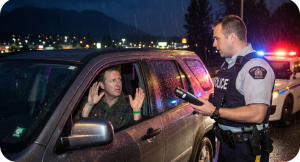
Under Canadian law, police officers equipped with an Approved Screening Device (ASD) can demand a roadside breath sample from any lawfully stopped driver. They do not need reasonable grounds or any suspicion that you have been drinking. At the roadside, you do not have the right to consult a DUI lawyer before deciding whether to provide a sample. Choosing to refuse at this stage immediately triggers criminal charges.
  1. Immediate Roadside Penalties
The moment you refuse a breath test; police will execute immediate provincial administrative sanctions:
  • Roadside Licence Suspension: An immediate 90-day licence suspension (length varies slightly by province).
  • Vehicle Impoundment: Your vehicle is towed and impounded for 7 days at your expense.
  • Administrative Fees: License reinstatement and impound fees add hundreds of dollars in immediate costs.
  1. Criminal Code Penalties
If convicted under the Criminal Code, you face severe criminal penalties:
Offence Frequency Minimum Criminal Fine Minimum Driving Prohibition Mandatory Jail Time
First Offence $2,000 fine 1-Year National Prohibition None
Second Offence Discretionary Fine 2-Year National Prohibition 30 Days Mandatory
Third+ Offence Discretionary Fine 3-Year National Prohibition 120 Days Mandatory
(Note: The mandatory minimum fine for a first-offence refusal is $2,000—double the minimum $1,000 fine for a standard first-time impaired driving charge.)
  1. Long-Term Consequences

Beyond court-imposed fines, a conviction carries long-term fallout:

  • Permanent Criminal Record: Appears on standard background checks, impacting employment and housing.
  • Travel Restrictions: A criminal record for refusal makes you legally inadmissible to several countries, including the United States.
  • Insurance Spikes: Insurance rates often skyrocket or require high-risk facility insurance, easily costing $5,000–$10,000 per year.
  • Ignition Interlock: Provinces typically mandate the installation of an ignition interlock device (at your cost) once your driving privileges are reinstated.

Are There “Reasonable Excuses” to Refuse?

The threshold for a “reasonable excuse” is extremely high. Courts generally reject arguments like:

  • “I wasn’t drinking, so I shouldn’t have to.”
  • “I wanted to speak to my lawyer first.” (Not applicable to roadside screening).
  • “I was scared or stressed.”

Valid medical excuses (such as severe respiratory illness preventing sufficient airflow) require rigorous medical evidence in court.

The Bottom Line

In Canada, you cannot avoid a DUI by refusing to blow. Refusal yields the exact same criminal record, higher immediate fines, and an automatic loss of driving privileges.

top